1145Documented
The priory
In 1145 Abbot Geoffrey of St Albans founded a priory of Benedictine nuns here. Its first prioress was Christina of Markyate. The priory was dissolved in 1537.
The estate has been known as Markyate Cell and Cell Park. Its story runs for nearly nine centuries, and each part below is marked as documented history or as legend.
In 1145 Abbot Geoffrey of St Albans founded a priory of Benedictine nuns here. Its first prioress was Christina of Markyate. The priory was dissolved in 1537.
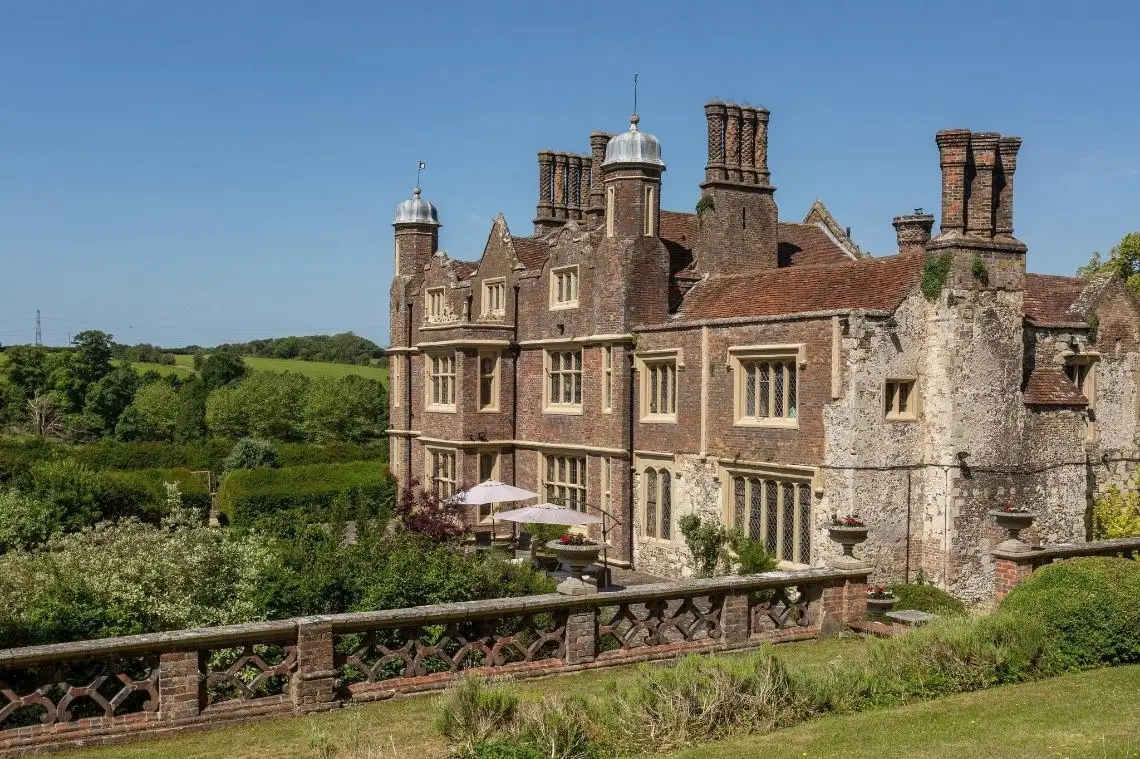
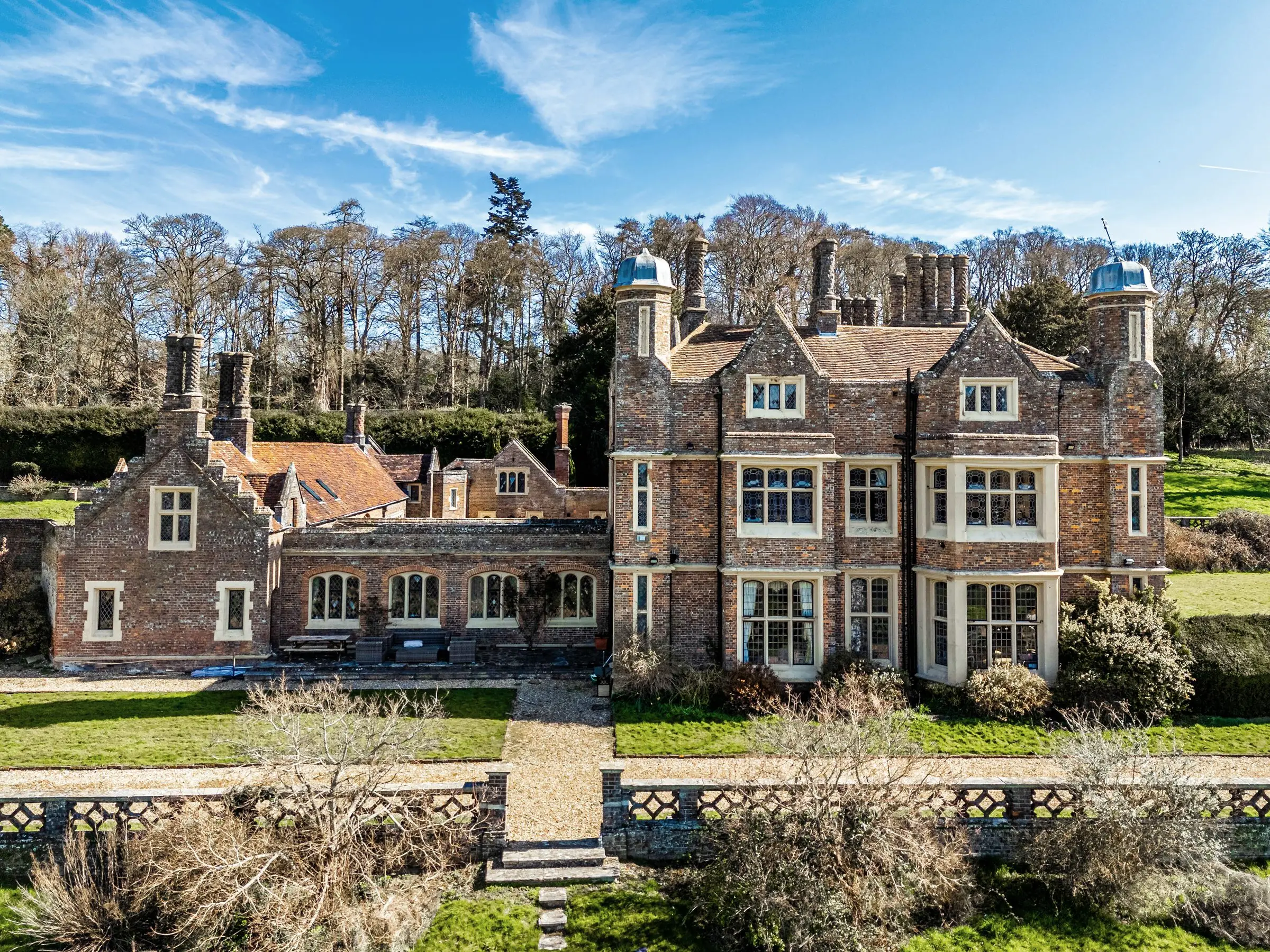
Humphrey Bourchier built a house beside the site of the priory church in 1539 to 1540. The Ferrers and Coppin families extended and remodelled it in the seventeenth century.
The house burned more than once. In the 1820s the architect Robert Lugar remodelled it in Tudor style, keeping medieval and Tudor fabric within the walls.
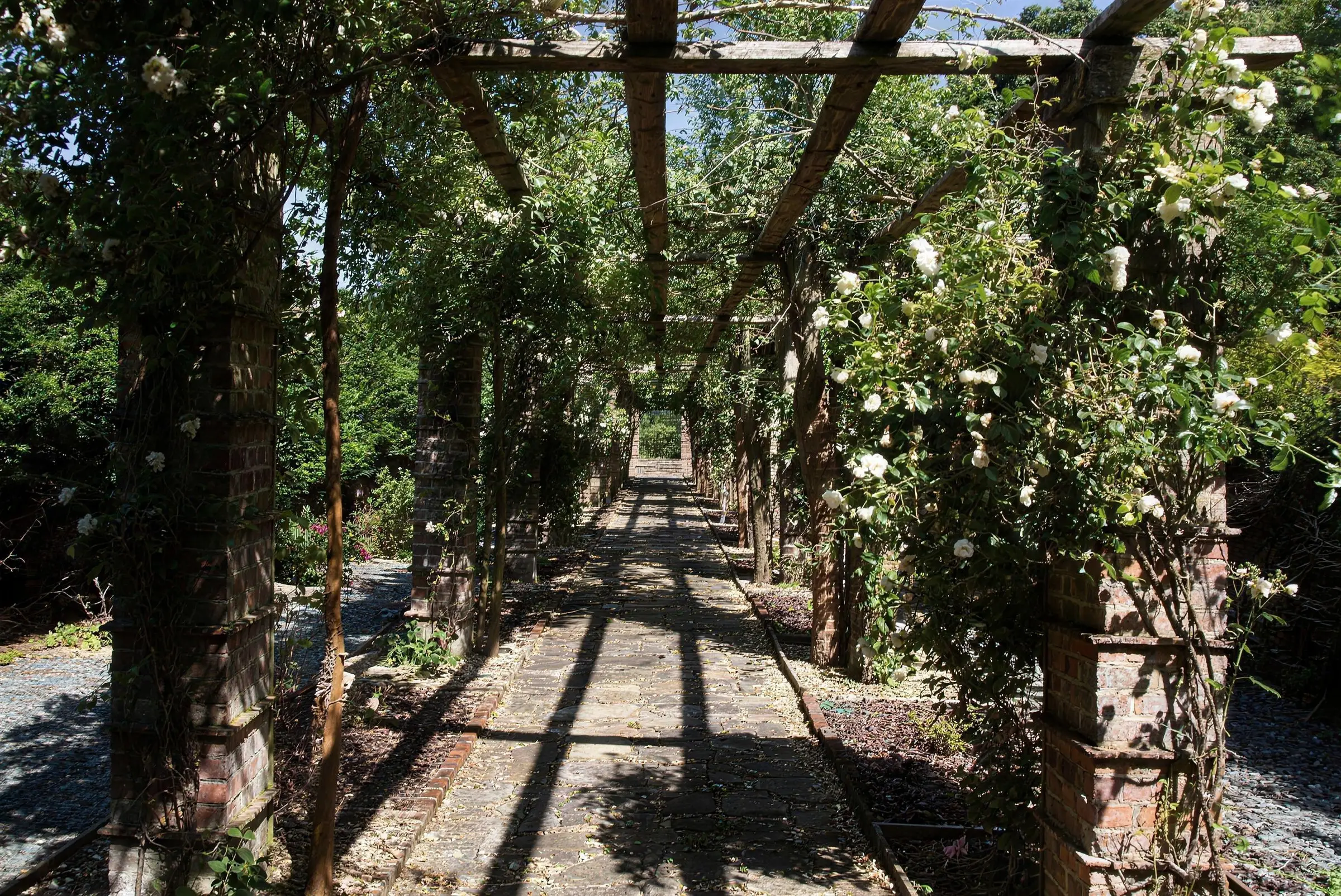
Joseph Howell laid out the park in the early nineteenth century. Around 1910 the garden designer George Dillistone made the formal garden, including a brick and timber pergola through the walled garden.
His design was published in 1913 in Gardens for Small Country Houses by Gertrude Jekyll and Lawrence Weaver. The house is listed Grade II* and the park and garden are registered Grade II.
Local tradition says that Lady Katherine Ferrers rode out from the house at night as a highwaywoman, leaving by a hidden stair, and died of her wounds trying to return.
It is a story, not a record. Historians have found no evidence that she lived here. The tale was filmed by Gainsborough Pictures as The Wicked Lady.
Sources: Historic England, National Heritage List for England, entries 1173939 (Cell Park) and 1000915 (Markyatecell Park).
 The estate today